
Fancade: 100+ Mini Games
WebVentures B.V.Arcade
4.31.84K Reviews
- Version
- 1.15.22
- Installs
- 10.00M
- Age Rating
- Everyone
Screenshots
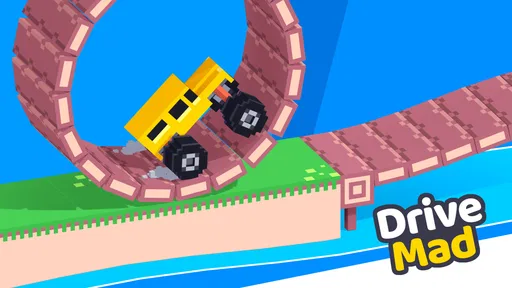
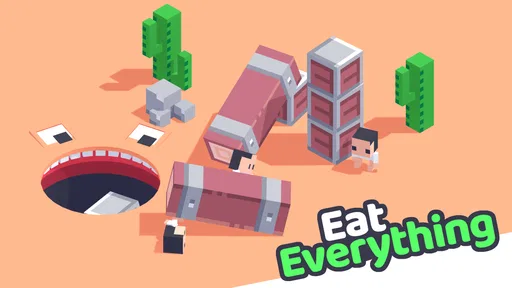


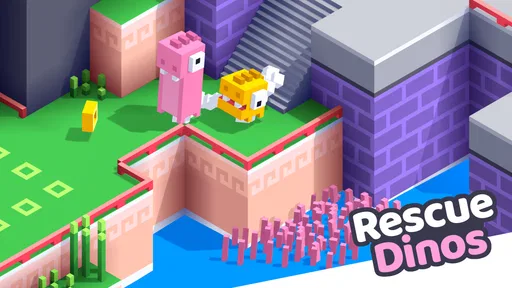

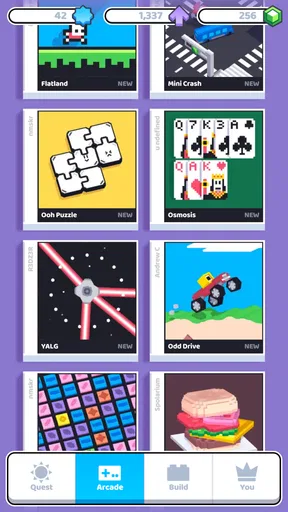
Our Review of Fancade: 100+ Mini Games
 Analysis by Appyee
Fancade is the kind of arcade game I open when I want variety without committing to a long campaign. It brings together a large collection of short mini games, while also letting players create and share games of their own. That combination gives it a clear identity: it is not simply a bundle of quick distractions, and it is not a full game-making tool either. It sits between the two, offering easy play first and creative experimentation when curiosity takes over.
After spending time with it, my main impression is that its greatest strength is convenience. I can move from one small challenge to another without downloading a separate title for every idea. The trade-off is that the experience can feel uneven. Some mini games are immediately enjoyable, while others work better as brief experiments than as something I would return to repeatedly. For me, that makes it a strong choice for short sessions, especially offline, but not the best replacement for a focused arcade game with one deeply polished core mechanic.
Why the collection works so well for short sessions
The game is published by WebVentures B.V. and belongs to the arcade category, which is a good description of how it feels in practice. The individual activities are designed to be approachable, with the emphasis on quick interaction rather than a complicated setup. I do not need to learn a large cast of characters, understand a long story, or remember a detailed control system before getting started.
That makes it particularly useful in ordinary gaps during the day. I can play while waiting for an appointment, take a few attempts during a break, or use it as a low-effort way to unwind before bed. The offline focus is important here. When I know I will be somewhere with unreliable connectivity, having a collection of playable mini games already available is more useful than a game that depends on a constant connection.
The variety also changes the rhythm of play. If one challenge does not suit my mood, I can leave it and try something else instead of forcing myself through a mode I dislike. This is a meaningful advantage over many traditional arcade downloads, where the entire experience depends on whether I enjoy one central mechanic. In Fancade, a less appealing activity does not necessarily spoil the whole package.
At the same time, variety is not the same as depth. A collection can give me more choice while giving each individual idea less room to develop. I often find myself judging the game by the quality of its best moments rather than expecting every activity to become a long-term favorite. That is not a flaw for a casual arcade collection, but it is worth understanding before installing it.
The store listing describes more than one hundred mini games, and that scale explains why the app feels closer to a playground than a single traditional title. I would not approach it expecting every game to have the refinement of a standalone release. Instead, I see the collection as a way to sample many compact ideas and quickly discover which kinds of challenges fit my personal taste.
Learning the collection instead of searching randomly
One practical habit improved my experience: I stopped treating every mini game as something I had to master. I now give a new activity a few attempts, pay attention to whether the controls feel natural, and move on if the appeal is not there. That approach prevents the weaker entries from becoming frustrating and makes the stronger ones easier to notice.
I also recommend playing in short themed bursts. For example, I might spend one session trying unfamiliar activities, then return later to the games that felt most responsive. This turns the broad collection into a personal shortlist. It is a small change, but it makes the app feel less scattered and gives repeated sessions more purpose.
Another useful trade-off is the balance between immediate fun and personal challenge. Some mini games are satisfying because they are easy to understand, while others become interesting only after I start looking for better timing or cleaner decisions. If I play only for novelty, I may overlook the games with more replay value. If I focus only on mastery, I miss the relaxed, disposable fun that makes the collection appealing in the first place.
Creation adds a second reason to keep playing
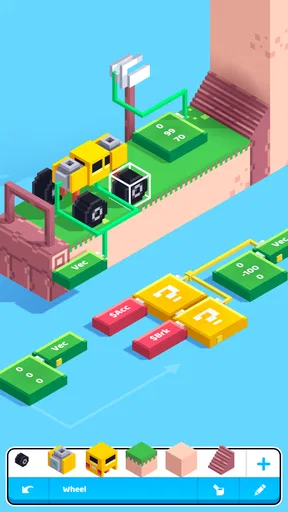
The creation tools are what separate this game from a normal arcade bundle. After playing the ready-made activities, I can switch from consumer to creator and try building something of my own. I enjoy this most when I treat it as a small design exercise rather than an attempt to produce a complete commercial-quality game.
A good first project is deliberately limited. I might begin with one clear objective, a small play area, and a single interaction that can be understood quickly. Keeping the idea narrow makes it easier to see whether the controls and challenge are actually fun. It also avoids a common mistake with creative tools: spending time adding decoration before confirming that the basic activity works.
Sharing adds a social dimension, but it also changes how I judge my own creations. A game that feels amusing to its maker may be confusing to someone seeing it for the first time. I found it useful to remove unnecessary instructions and make the intended action obvious through the layout. In a compact mini game, clarity matters more than ambition.
The most valuable creative lesson is to design for the first few seconds. If a player cannot tell what to do almost immediately, the idea may be hidden behind its presentation. That insight is easy to miss when simply browsing a store page, but it becomes clear once I try making and sharing a small game myself.
There is also a trade-off between accessibility and control. A simplified creation system can help beginners produce something playable quickly, but it may feel restrictive to experienced designers who want fine control over every detail. I see Fancade’s tools as best suited to experimentation, prototyping, and sharing compact ideas, not as a substitute for dedicated game-development software.
Where the experience loses momentum
The biggest weakness is inconsistency. A large collection naturally contains activities that differ in polish, pacing, and replay value. I can enjoy several games in a row and then encounter one that feels less satisfying, either because the controls do not match my preferences or because the challenge does not hold my attention for long.
That unevenness is more noticeable when I compare the app with a focused arcade game. A dedicated title can spend all of its design effort refining one movement system, one scoring loop, or one progression structure. Fancade offers breadth instead, so it cannot always provide the same sense of carefully tuned continuity. If I want to improve at one mechanic over many sessions, a specialized game is usually the better choice.
The creative side can create a similar issue. The freedom to make and share games is appealing, but not every shared creation will be equally polished or intuitive. I need patience when exploring user-made material, because the presence of a playable idea does not guarantee that it will be balanced or immediately understandable. This is not a reason to avoid the feature; it is a reason to approach it with curiosity rather than the expectations I would bring to a professionally structured campaign.
Another limitation is that the collection can encourage shallow switching. When a challenge becomes difficult, it is easy to leave it and start something new. That is convenient, but it can also reduce the satisfaction that comes from learning a demanding mechanic. I get the most from the app when I deliberately choose whether I want variety or improvement before I begin playing.
The free price makes trying it easy, although optional in-app purchases range from ninety-nine cents to twenty-four dollars and ninety-nine cents per item. That pricing range is worth keeping in mind if I am trying to control spending, particularly because a broad collection can make optional extras tempting. I would start with the free experience and decide later whether any purchase genuinely improves the way I play.
Who should install it, and who should skip it
I would recommend it to people who like arcade games but do not want to repeat the same format every time they play. It is especially suitable for families and casual players because its content rating is Everyone, and the short activities make it easy to hand the phone to someone else without explaining a large rule set first.
It also fits creative players who want a friendly introduction to making small games. Someone who has never designed a game may find the low-pressure approach more inviting than opening a complex development program. The best mindset is to experiment, accept that some ideas will be rough, and use sharing as a way to see whether the concept communicates clearly.
For a realistic everyday example, I might install it before a long trip where I expect periods without internet access. During the journey, I can use the ready-made activities for quick entertainment, then spend a quieter part of the trip shaping a tiny game idea. That gives the app two roles: a source of immediate arcade play and a lightweight creative hobby. A conventional single-game download would probably serve the first role well, but not the second.
I would skip it if I am looking for a story-driven adventure, a serious competitive ranking environment, or one highly refined mechanic that I can practice for weeks. I would also choose a dedicated creation platform if my goal were to build a large project with advanced systems. Fancade is more convincing when I want accessible experimentation than when I need professional-level control.
Device compatibility is straightforward for many Android users: the current version is 1.15.22 and requires Android 6.0 or later. That makes it available to a wide range of devices, though the actual comfort of playing and creating will still depend on screen size and how responsive the phone feels. A larger display can make building and reviewing a creation more comfortable, while a smaller phone favors quick play sessions.
What its popularity tells me, and what it does not
The game has passed ten million installs and holds a 4.3 average from around one hundred twenty-one thousand ratings, with about one thousand eight hundred written reviews. Those figures suggest that the broad concept connects with a substantial audience, especially people who appreciate a free arcade collection with a creative layer.
I would not treat popularity as proof that every mini game will suit me. The app’s appeal depends heavily on how much I value variety, offline access, and making small games. Someone who wants one perfectly focused experience may still prefer a standalone arcade title, even if this collection has more total content.
For my own use, the strongest reason to return is not simply the number of activities. It is the ability to change modes when my mood changes. I can play casually, look for a more demanding challenge, or experiment with creation. That flexibility gives the app more staying power than a basic list of unrelated mini games, provided I am willing to choose my own direction rather than expecting the app to provide a single, carefully paced journey.
My final recommendation
Fancade succeeds because it understands a common mobile habit: sometimes I want a game that starts immediately, ends whenever I feel like stopping, and gives me something different to try next. Its offline mini games make it practical, while the creation and sharing tools give the collection a personal dimension that most arcade alternatives do not offer.
Its limitations are equally clear. The quality and replay value can vary, switching can become a way to avoid learning difficult mechanics, and the creation tools are better for compact experiments than ambitious projects. Those compromises are acceptable to me because the app is not promising one grand, unified arcade experience. It is offering a flexible shelf of small ideas.
With more than ten million installs, a free entry point, and an Everyone rating, it is easy to see why the game has broad appeal. I recommend it to casual arcade fans, travelers, families, and curious beginners who want to try game creation without a heavy commitment. I would point dedicated competitors, story seekers, and serious designers elsewhere. For everyone between those groups, this is a genuinely useful pick for filling short breaks with play and experimentation.
Verdict
Strengths of Fancade: 100+ Mini Games
- Huge variety of quick games across multiple genres
- Simple controls make most games easy to pick up
- Works well for short play sessions
- Includes user-created games for fresh content
- Creative tools let players build their own levels
Limitations of Fancade: 100+ Mini Games
- Some games feel less polished than others
- Frequent ads can interrupt the experience
- Certain content may require in-app purchases
- Game quality varies widely between creators
- Offline access may be limited for some features
Other Releases by WebVentures B.V.
View All
Level Devil - NOT A Troll Game
Action4.8

Drive Mad: Physics Racing
Racing4.8
Similar Picks in This Category
View All
Subway Surfers
SYBO Games4.6

Stickman Party 234 MiniGames
PlayMax Game Studio4.6

Subway Princess Runner
Ivy4.4

Temple Run
Imangi Studios4.2

Zombie Tsunami
Mobigame SAS4.6

Stack Ball - Crash Platforms
CASUAL AZUR GAMES4.5
Frequently Asked Questions
What is Fancade: 100+ Mini Games?
Fancade is a mobile gaming platform that combines a large collection of short, casual mini-games with a user-generated content system. Instead of focusing on one genre, it offers puzzles, racing challenges, arcade games, platformers, logic tests, and other quick experiences. The games are designed for short sessions, making the app suitable for playing during breaks or whenever you want something easy to pick up.
Is Fancade: 100+ Mini Games free to download and play?
Fancade can generally be downloaded for free on supported Android and iOS devices, allowing users to access a selection of games without paying upfront. However, the free experience may include advertisements, limits, or optional purchases depending on the version and platform. Before downloading, it is worth checking the current store listing, in-app purchase details, and subscription information available for your region.
Does Fancade require an internet connection?
Some Fancade content may be playable offline after it has been loaded, which is convenient when traveling or when mobile data is unavailable. Nevertheless, an internet connection can be necessary for downloading additional games, synchronizing progress, viewing advertisements, accessing online features, or loading content created by other users. Offline availability may vary between individual games, so it is best not to assume that every feature works without connectivity.
Are there many different types of games in Fancade?
Yes. One of Fancade’s main strengths is its variety. The app includes numerous bite-sized games covering genres such as racing, platforming, puzzles, physics challenges, arcade action, and strategy. The games differ in difficulty and quality because the platform also features content created with its in-app development tools. This variety keeps the experience fresh, although users may find that some games are more polished or engaging than others.
Is Fancade suitable for children and does it contain ads?
Fancade is generally approachable for younger players because many games use simple controls and short, easy-to-understand objectives. However, parents should review the app’s age rating, advertising practices, and purchase settings before allowing unsupervised use. Advertisements or optional paid features may appear, and user-created content can vary in style. Enabling parental controls and restricting in-app purchases is recommended for children using the app.
Play our best games!


